Indus Valley Cities
Harappan cities such as Mohenjo-daro and Dholavira demonstrate sophisticated urban planning, drainage systems, standardized construction and carefully organized streets.
STONES THAT REMEMBER
From carefully planned cities of the ancient Indus Valley to monumental temples, rock-cut sanctuaries, mosques, forts and imperial masterpieces, explore the architectural traditions that transformed the Indian subcontinent.
MORE THAN BUILDINGS
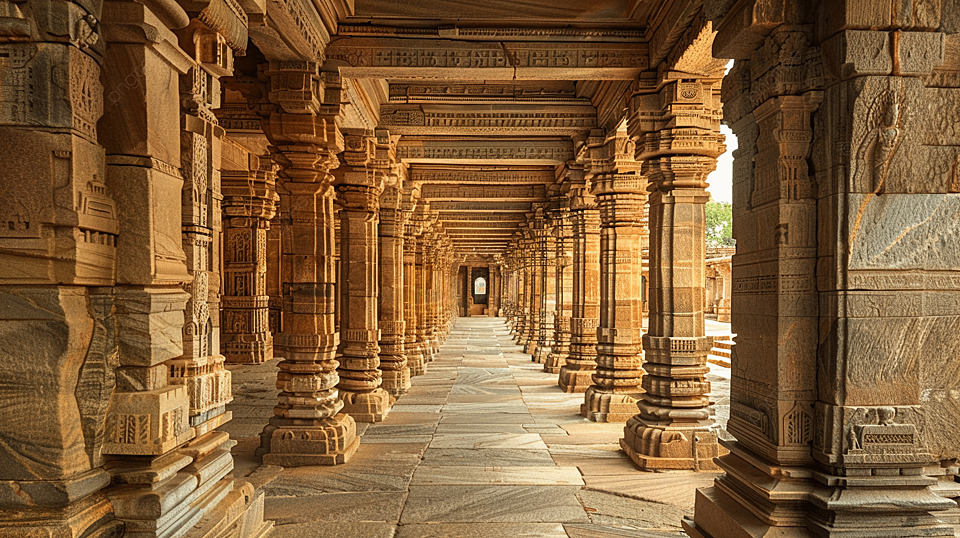
Indian architecture developed over thousands of years through interaction between local traditions, religious ideas, political power, technology, geography and artistic expression.
Cities, temples, monasteries, mosques, forts, palaces, stepwells and public structures reveal how different societies organized space and expressed their ideas about religion, authority, community and beauty.
A CONTINENT OF ARCHITECTURAL TRADITIONS
India's architectural history cannot be reduced to a single style. Different regions developed distinctive forms while also influencing one another.
From the geometric planning of Harappan cities to the monumental stone temples of South India and the grand domes and gardens of the Mughal period, architecture reflects changing technologies and cultural landscapes.
ARCHITECTURAL TIMELINE
Harappan cities such as Mohenjo-daro and Dholavira demonstrate sophisticated urban planning, drainage systems, standardized construction and carefully organized streets.
The Mauryan period saw major development in monumental architecture, including polished stone work, pillars, stupas and rock-cut traditions.
Buddhist, Jain and Hindu communities developed caves and rock-cut sanctuaries across the subcontinent, transforming natural rock into monumental spaces.
Early structural temple traditions developed further during this period, contributing to forms that influenced later Hindu temple architecture.
Mahabalipuram became an important centre of rock-cut and structural architecture, including the Shore Temple and the famous monolithic rathas.
Chola rulers built monumental stone temples characterized by enormous vimanas, sculptural programs, inscriptions and sophisticated planning.
Arches, domes, minarets, geometric decoration, calligraphy and new construction techniques became part of India's architectural landscape.
Mughal architecture combined Central Asian, Persian and Indian traditions in monumental complexes, gardens, tombs, mosques and palaces.
THE EARLIEST GREAT URBAN TRADITION
c. 2600–1900 BCE
Harappan settlements demonstrate remarkable attention to urban organization. Streets, buildings, wells and drainage systems were arranged according to planned layouts in several major settlements.
Mohenjo-daro, Harappa and Dholavira provide important archaeological evidence for the sophistication of Bronze Age urban society.
Wells, reservoirs and drainage systems demonstrate advanced approaches to managing water within settlements.
Standardized brick dimensions were widely used across Harappan settlements, showing considerable consistency in construction.
Dholavira is particularly notable for its reservoirs, fortifications and carefully organized urban zones.
The Great Bath at Mohenjo-daro is one of the most recognizable structures associated with the Indus Valley civilization.
SOUTH INDIA
South Indian architecture developed distinctive temple forms over many centuries, especially through the Pallava, Chola, Pandya and later Vijayanagara traditions.
The Pallavas played an important role in the development of South Indian rock-cut and structural temple architecture.
Mahabalipuram contains monolithic rathas, rock-cut caves and the Shore Temple, illustrating an important transition toward mature structural temple forms.
The Cholas transformed temple construction into an enormous expression of royal power, religion, art and administration.
The Brihadisvara Temple at Thanjavur, completed under Rajaraja Chola I around 1010 CE, is among the most celebrated monuments of the Chola period.
Pandya-period architecture contributed to the development of major temple centres in southern Tamil country and participated in the continuing evolution of Dravidian temple traditions.
Vijayanagara architecture became famous for monumental temple complexes, pillared halls, gateways, markets and large-scale urban planning.
ARCHITECTURAL MASTERPIECE
Thanjavur • Completed c. 1010 CE
Commissioned by Rajaraja Chola I, the Brihadisvara Temple represents the extraordinary scale and ambition of Chola monumental architecture.
Its enormous vimana, sculptural decoration, inscriptions and carefully organized temple complex demonstrate the close relationship between architecture, religion, royal authority and administration.
NORTH INDIA
Northern and central India developed architectural traditions that differed in form from the major southern Dravidian tradition while continuously evolving through regional schools.
Nagara temple traditions are broadly associated with northern India and are often characterized by curving or tower-like shikhara forms above the sanctum.
The Khajuraho group of temples, largely built during the Chandela period, demonstrates sophisticated temple planning and extensive sculptural decoration.
The Sun Temple at Konark, built in the 13th century under the Eastern Ganga dynasty, is renowned for its monumental design and sculptural program.
Himalayan regions developed distinctive architectural forms influenced by local materials, climate, geography and religious traditions.
NEW ARCHITECTURAL SYNTHESIS
From the medieval period onward
True arches became an important structural feature in many Indo-Islamic monuments.
Dome construction became an important architectural feature in mosques, tombs and other monumental structures.
Arabic and Persian calligraphic traditions became major decorative elements in many Islamic monuments.
Indo-Islamic architecture developed through interaction between Islamic architectural ideas and existing Indian building traditions. Local craftsmen, materials and decorative practices contributed to distinctive regional styles.
IMPERIAL ARCHITECTURE
Mughal architecture combined Persian, Central Asian and Indian traditions into monumental imperial complexes.
Completed in the 16th century, Humayun's Tomb became an important example of Mughal garden-tomb architecture.
Formal garden layouts based on divided quadrilateral spaces became an important feature of Mughal architectural planning.
Completed in the 17th century under Shah Jahan, the Taj Mahal is one of the most famous monuments of Mughal architecture.
Its white marble surfaces, dome, minarets, geometric planning, gardens, inlay work and symmetrical composition demonstrate the sophistication of imperial Mughal design.
Built in Shahjahanabad during Shah Jahan's reign, the Red Fort formed the centre of Mughal imperial power in Delhi.
ENGINEERING BEHIND THE BEAUTY
Stone, brick, timber, lime mortar, sandstone and marble were used according to regional resources and architectural requirements.
Symmetry, proportion, repeated geometric patterns and carefully planned spatial relationships appear throughout many architectural traditions.
Builders developed sophisticated methods for supporting massive stone structures, domes, towers and monumental roofs.
Reservoirs, wells, tanks, stepwells, channels and drainage systems played important roles in many Indian settlements.
Courtyards, shaded spaces, thick walls, ventilation systems and regional materials often responded to local climate.
Religious and architectural traditions often placed importance on orientation, movement, sacred geometry and relationships between buildings and surrounding landscapes.
THE LEGACY
Temples, monasteries, mosques and other sacred spaces continue to influence architecture, art and cultural identity.
Sculpture, stone carving, painting, calligraphy and decorative traditions remain visible in India's architectural heritage.
Ancient and medieval builders demonstrated sophisticated knowledge of materials, water management, construction and spatial planning.
Numerous Indian monuments are now recognized as important cultural heritage sites and attract visitors and researchers from around the world.
THE FINAL STONE
Political powers changed, dynasties disappeared and borders were redrawn. Yet the buildings they created continue to tell stories about the people who designed, built, worshipped, governed and lived among them.
India's architectural heritage is therefore not only a collection of monuments. It is a record of human creativity, engineering, belief and ambition.
History Explorer is an independent educational project developed as part of a Diploma course. It is created solely for educational and informational purposes and is not intended for commercial use.
Historical information presented on this website has been compiled for learning and general reference. While reasonable care has been taken in preparing the content, some information may be simplified, incomplete, or subject to historical interpretation. Readers are encouraged to consult authoritative academic and historical sources for detailed or scholarly research.
This project does not intend to offend, misrepresent, or promote any particular culture, religion, belief, community, or historical perspective.